The Story of Aboriginal Art: Culture, Country, and Creative Expression
Aboriginal art is one of the oldest ongoing artistic traditions in the world. With roots stretching back over 65,000 years, it is much more than just a visual experience—it’s a deep cultural and spiritual practice, connecting Aboriginal people to land, ancestors, and the Dreaming. From ancient rock engravings to contemporary acrylic paintings, Aboriginal art continues to evolve while preserving the essence of Indigenous Australian identity.
✨ A History Carved in Stone
The earliest known Aboriginal artworks are found in rock shelters and caves—paintings and carvings that document daily life, spiritual beliefs, and the laws of the land. These ancient artworks used natural pigments like ochre, charcoal, and clay, and were often found in sacred sites.
Central to much of this art is the concept of the Dreaming (or Dreamtime), a complex network of stories and law that explains the creation of the world, the land, animals, and people. Every painting is more than a pattern—it’s a piece of this spiritual map.
In the mid-1900s, artists such as Albert Namatjira began blending traditional stories with European techniques. His watercolour landscapes opened a door for Aboriginal artists to reach a wider audience while still holding on to cultural roots.
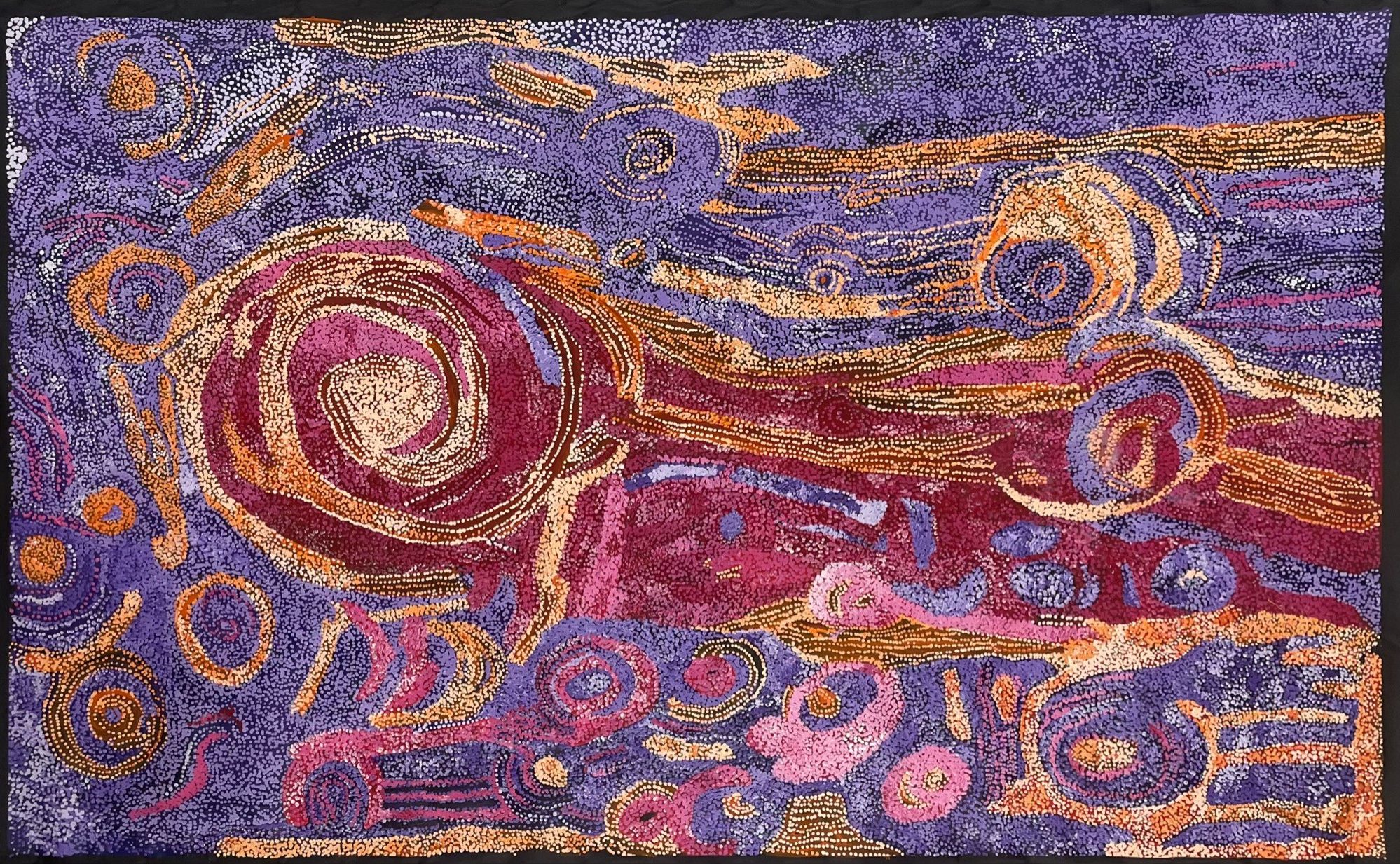
By the 1970s, a major turning point came when elders in Papunya (Northern Territory) began painting stories from the Dreaming using acrylic paints on canvas. This was the beginning of the Western Desert Art Movement—a style now instantly recognizable through its vibrant dots, symbols, and aerial views of country.
🌏 Regional Styles Across the Continent
Aboriginal art is far from one-size-fits-all. Australia is home to hundreds of Indigenous nations, each with its own language, customs, and art style. Here’s a look at the key regions and their unique artistic voices:
Central & Western Desert
Famous for dot painting, artists from this region use patterns to map out sacred sites, waterholes, and songlines from the Dreaming. Paintings often resemble aerial views of the land and are filled with coded meanings understood by those initiated into the stories.
APY Lands (South Australia)
The Anangu Pitjantjatjara Yankunytjatjara (APY) Lands are located in the remote northwest corner of South Australia. Art from this region is deeply spiritual and grounded in Tjukurpa (the Dreaming). APY artists, many of them women, create powerful works using bright acrylics to depict sacred stories, ancestral beings, and the land. The APY Art Centre Collective has gained national acclaim, supporting artists from communities like Ernabella, Mimili, and Indulkana. Their vibrant, layered canvases speak to deep cultural traditions while contributing to contemporary Australian art.
Arnhem Land (Northern Territory)
Artists here are known for “rarrk” (cross-hatching) and x-ray art—paintings that show both the outside and the inner bones and organs of animals. Bark painting is also popular in this region, typically done on sheets of eucalyptus bark.
Kimberley Region (Western Australia)
This area features two standout traditions: Wandjina spirit beings—cloud and rain figures with no mouths—and the even older Gwion Gwion (Bradshaw) rock paintings, believed to date back tens of thousands of years.
Lockhart River (Cape York Peninsula, Queensland)
Emerging in the 1990s, the Lockhart River Art Gang brought fresh energy and a contemporary voice to Aboriginal art. The young artists from this coastal community fuse traditional stories and knowledge with bold, expressive styles and vibrant colour palettes. Their work often reflects the rainforest, sea life, and local culture, offering a unique visual language distinct from desert or bark traditions. Artists like Rosella Namok, Fiona Omeenyo and Samantha Hobson have helped put this region on the global art map.
Torres Strait Islands
Though not technically Aboriginal but Indigenous, Torres Strait Islander art is distinct, with influences from Melanesia. It often includes intricate headdresses, sculpture, and lino prints that reflect sea life and spiritual beings.
Urban and Contemporary Aboriginal Art
Aboriginal artists living in cities often use modern media like photography, installation, and digital art to express themes of identity, colonisation, survival, and cultural pride. Their work bridges the gap between ancient tradition and modern storytelling.
🖌️ Celebrated Aboriginal Artists
Albert Namatjira (1902–1959)
One of the first Aboriginal artists to gain national recognition, Namatjira was known for his stunning watercolour landscapes of the Central Australian outback. His success helped pave the way for future generations.
Emily Kame Kngwarreye (c.1910–1996)
A senior Anmatyerre woman from Utopia in the Northern Territory, Emily began painting late in life but produced over 3,000 works. Her energetic brushstrokes and use of colour captured the seasonal rhythms and deep knowledge of her land.
Clifford Possum Tjapaltjarri (1932–2002)
A central figure in the Western Desert art movement, Clifford was known for large, complex works that wove together multiple Dreaming stories in a single canvas.
Minnie Pwerle (c.1910–2006)
With bold lines and vibrant colours, Minnie’s work celebrated women’s Dreaming and body paint designs. Her style was joyful, free, and rooted in cultural ceremony.
Rover Thomas (c.1926–1998)
From the East Kimberley, Rover was one of the first Indigenous artists to represent Australia at the Venice Biennale. His works are stark and powerful, often painted on board with natural pigments, reflecting his people’s spiritual relationship with the land.
The Tjapaltjarri Brothers – Warlimpirrnga, Walala, and Thomas
Originally part of the Pintupi Nine, the last group of Indigenous Australians living entirely traditional nomadic lives, the Tjapaltjarri brothers emerged from the Gibson Desert in the mid-1980s. Soon after joining community life, they began painting their Dreamings with the Papunya Tula Artists collective. Their works, often featuring precise geometric forms and repeat patterns, express deep knowledge of sacred stories, waterholes, and ancestral tracks. Their art is both contemporary and timeless, connecting the modern world to one of the oldest living cultures on Earth.
Yukultji Napangati
Also a member of the Pintupi Nine, Yukultji has become one of the most respected female artists from the Western Desert. Her paintings are subtle and atmospheric, often featuring shimmering dots and abstract forms that represent sandhills, water, and ceremonial stories. Her work has been exhibited internationally and is held in major collections across Australia.
🧠 Aboriginal Art Today
Today, Aboriginal art is thriving in galleries, museums, and communities across Australia and the world. It has become a source of economic empowerment for remote communities, a form of resistance, and a living continuation of culture.
Modern Aboriginal artists are blending styles, experimenting with form, and speaking truth through their work. Aboriginal art continues to flourish as a strong and unbroken cultural force.
Explore and Invest in Celebrated Aboriginal Art at Australia.Gallery
Most of the artwork from these celebrated artists, or their families, is available for viewing and purchase at Australia.Gallery, a platform dedicated to supporting and showcasing Indigenous Australian artists. You can explore these powerful artworks, learn more about their cultural significance, and even invest in pieces that tell the rich stories of Aboriginal Australia.
For more information, please visit:
Australia.Gallery
www.galleryaustralia.com.au
Email: info@galleryaustralia.com.au
Phone: 0417 642 921
Instagram: Instagram