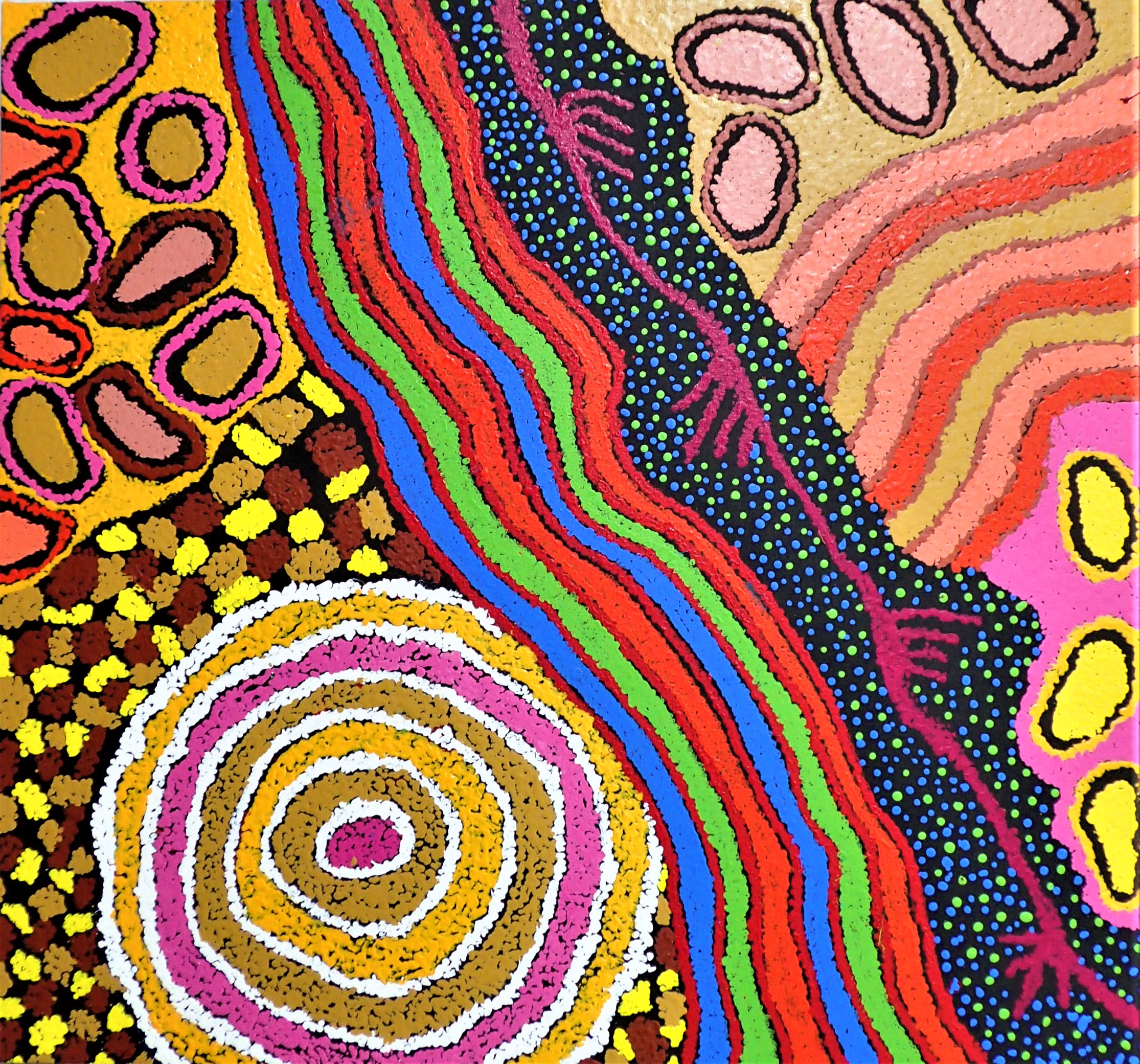
The APY Lands (Anangu Pitjantjatjara Yankunytjatjara) in remote northwest South Australia are home to profound Dreamtime (Tjukurrpa) stories that shape the landscape, laws, and cultural identity of the Pitjantjatjara, Yankunytjatjara, and other Anangu people. These ancient narratives are living traditions, passed through generations and vividly expressed in contemporary Aboriginal art. Artists from communities like Amata, Indulkana, and others use acrylic on canvas to map Songlines, sacred sites, and ancestral journeys with intricate dot patterns, symbolic designs, and vibrant colors that encode restricted knowledge.
Two significant stories from the APY Lands are Wati Ngintaka Tjukurrpa (the Perentie Lizard Man Dreaming) and Minyma Marlilu Tjukurrpa (often associated with women’s ceremonies and ancestral women figures). These tales highlight creation, pursuit, transformation, and the establishment of cultural protocols across the desert.
Wati Ngintaka Tjukurrpa – The Perentie Lizard Man Dreaming
Wati Ngintaka is a powerful ancestral being, the giant perentie lizard (a large monitor lizard native to the desert). In the Tjukurrpa, he embarks on an epic journey across the APY Lands after hearing the rhythmic clapping sound of a beautiful grinding stone (used for processing bush foods). Drawn by its allure, he steals the grindstone and flees westward, pursued by its rightful owners—often women or kin groups—who seek to reclaim it.
As he travels, Wati Ngintaka creates or marks significant landforms: sandhills, rock holes, water sources, and other features that sustain life in the arid country. His path forms a Songline, connecting places of cultural and spiritual importance. The story carries teachings about respect for resources, consequences of theft or improper desire, and the interconnectedness of people, animals, and Country. In some versions, the pursuit leads to dramatic confrontations or transformations, embedding moral and ceremonial laws.
Artists from the APY Lands frequently depict this Tjukurrpa, using bold representations of the lizard’s tracks, body patterns, and the landscapes he shaped.
Wati Ngintaka
Minyma Marlilu Tjukurrpa Dreaming – Women’s Ancestral Story
Minyma Marlilu refers to ancestral women (Minyma meaning women) central to women’s law and ceremonies in Anangu culture. This Tjukurrpa often involves groups of women traveling, performing inma (ceremonial songs and dances), gathering bush tucker, and shaping women’s sacred sites. It emphasizes female knowledge, kinship, healing practices, and the protection of women’s business.
Variations may include interactions with other beings or the creation of specific waterholes and rock formations tied to women’s Dreaming. These stories are deeply gendered and restricted, with layers of meaning revealed only through initiation. Paintings of Minyma Marlilu typically feature women’s symbols—circles for camps or water, arcs for digging sticks, U-shapes for seated figures—and vibrant palettes reflecting the desert’s energy and spiritual power.
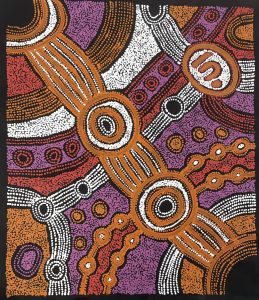
Minyma Marlilu Tjukurrpa by Clarise Tunkin, Acrylic on Canvas. A powerful representation of Pitjantjatjara ancestral stories and spiritual connections.
Artists and Paintings from Australia.Gallery
At Australia.Gallery, authentic APY Lands artworks bring these Tjukurrpa to life, allowing collectors to connect with Anangu culture.
Collaborative or individual works by artists such as Rini Tiger and Megan Lyons capture elements of the Wati Ngintaka story, portraying the ancestral lizard’s journey, his powerful form, and the landforms he created. Their paintings use traditional dot techniques alongside expressive compositions that evoke movement across vast Country, honoring the theft of the grindstone and the enduring chase.
Similarly, Clarise Tunkin and Julie Woods interpret the Minyma Marlilu Tjukurrpa (and related women’s Dreamings) in their artworks. Clarise, from the APY Lands, and Julie often depict ancestral women figures, ceremonial designs, and sacred women’s sites. Their collaborative or individual pieces feature intricate patterns symbolizing women’s law, gatherings, and the spiritual essence of Minyma. For example, Julie Woods has works like those depicting Minyma Kutjara (Two Sisters) or related women’s Tjukurrpa, rendered in rich acrylics that convey depth and cultural authority.
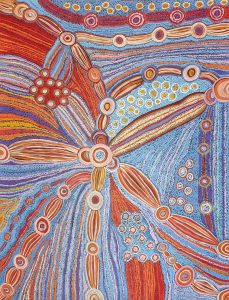
Julie Woods Australia.Gallery Cairns
These paintings are more than art—they are contemporary expressions of ancient knowledge, available for appreciation or acquisition directly through the gallery’s collection of Aboriginal works from the APY Lands.
The Power of These Stories in Art
Both Wati Ngintaka and Minyma Marlilu Tjukurrpa remind us of the living nature of Tjukurrpa: ancestors continue to influence the present through the land and its custodians. Artists like Rinti Tiger, Megan Lyons, Clarise Tunkin, and Julie Woods keep these narratives vibrant, bridging generations and sharing Anangu perspectives with the world.
Explore the APY Lands collection HERE to view and support these powerful artworks, each a portal to the Dreamtime.