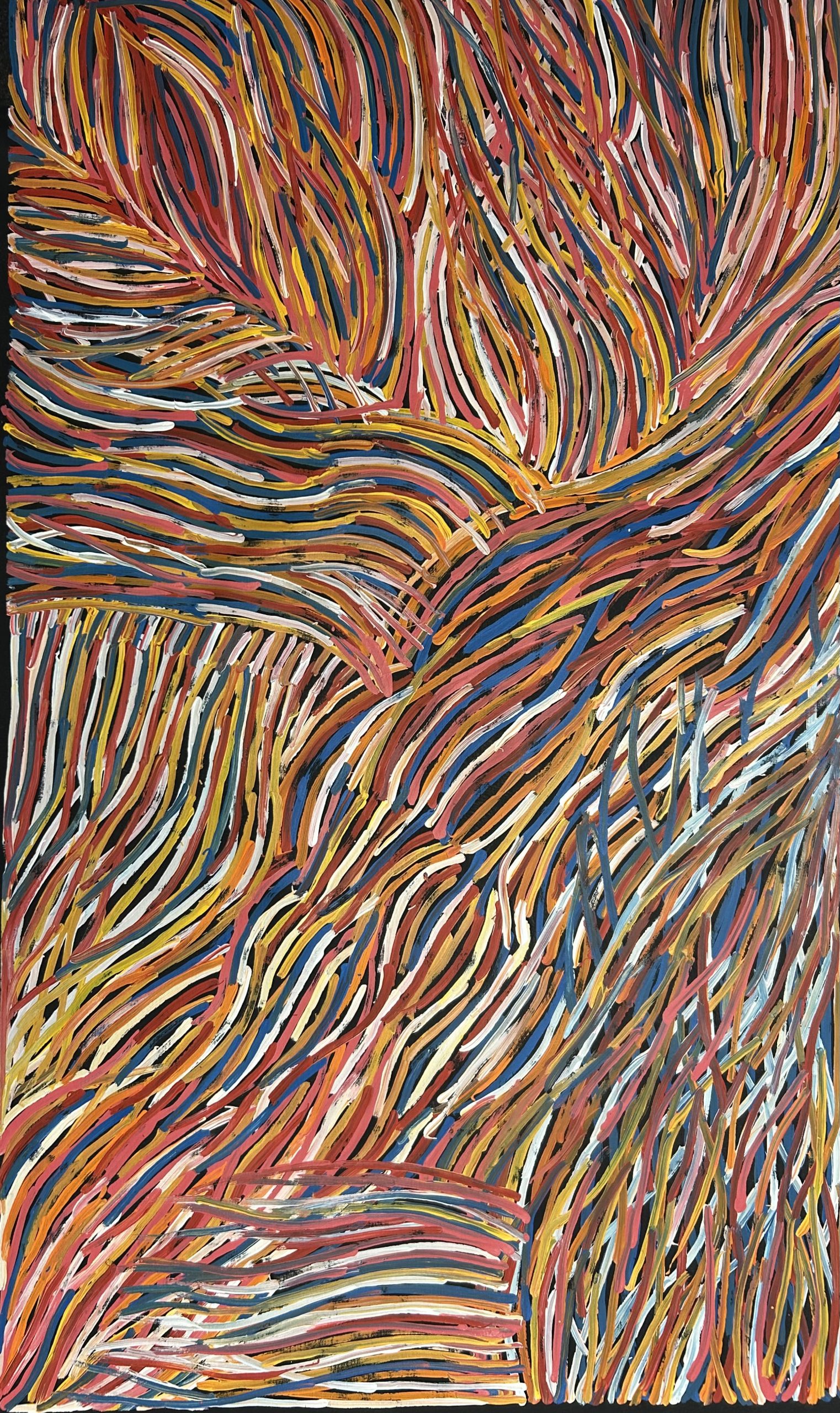
Dora Mbitjana Painting Australian Aboriginal Art
$3,500.00
154 cm x 90 cm
Dora Mbitjana, an Anmatyerre woman born in 1965, hails from Ahalpere country in the remote Utopia region northeast of Alice Springs, a hub for Indigenous art since the late 1970s. Growing up amid the vast deserts and cultural traditions of her people, Dora was immersed in the stories and ceremonies that define Anmatyerre life. As the youngest of seven children to the late Minnie Pwerle—a pioneering artist whose bold, colourful works are held in major collections worldwide—and Motorcar Jim, she inherited a profound artistic lineage. This family connection extends to her sisters, including the internationally recognised Barbara Weir, known for her grass seed and wildflower paintings, and Betty Mbitjana, who also explores Dreaming narratives. Aunts Galya Pwerle and Emily Pwerle, along with cousins like Lizzie Morton and Jessie Hunter, further weave a tapestry of creative influence, emphasising the intergenerational sharing of knowledge in Aboriginal communities.
Dora’s entry into professional painting came around 2003, when she started creating for galleries, drawing directly from the Dreamings passed down by her mother. Without a formal government-funded art centre in Utopia until more recent developments, artists like Dora relied on familial guidance and community resilience to express their culture. Her primary themes include Awelye Atnwengerrp (women’s ceremonial body painting), which celebrates the sacred designs applied during rituals to connect with ancestors and country; Ahakeye (Bush Plum Dreaming), depicting the seasonal abundance of this vital desert fruit; and Bush Berry Dreaming, evoking the gathering and spiritual significance of native berries. These subjects not only preserve Anmatyerre lore but also reflect the roles of women in maintaining cultural continuity.
Stylistically, Dora employs acrylic paints on canvas to produce fluid, layered artworks. Linear patterns mimic the intricate body paint used in ceremonies, while small circles represent anemangkerr (bush melons) and larger concentric ones symbolise essential waterholes in Atnwengerrp country. Her palette is broad and vibrant, infusing energy and depth into compositions that blend traditional iconography with personal interpretation. This approach honours Minnie Pwerle’s influence—known for her expressive, abstract renderings—while establishing Dora’s unique voice in the Utopia art movement, which gained prominence through batik workshops in the 1980s before transitioning to acrylics.
Though less documented than her mother’s career, Dora’s paintings contribute to the ongoing vitality of Indigenous art, appearing in ethical galleries and private collections. They serve as a bridge between past and present, ensuring Dreamings endure amid the challenges of remote living, such as limited resources and access. In a broader context, her work exemplifies how Utopia artists have transformed cultural expression into a means of economic and social empowerment, influencing global perceptions of Aboriginal creativity.